What is a nonpoint sources pollution?
Acccording to the U.S Environmental Pollution Agency, nonpoint source (NPS) pollutioncomes from many diffuse sources. NPS pollution is caused by rainfall or snowmelt moving over and through the ground. As the runoff moves, it picks up and carries away natural and human-made pollutants, finally depositing them into lakes, rivers, wetlands, coastal waters, and even our underground sources of drinking water.
According to the National Oceanic and Atmospheric Administration eighty percent of pollution to the marine environment comes from the land. The result of runoff is nonpoint sources pollution which include small sources like septic tanks, cars, trucks, and boats, plus larger sources, such as farms, ranches, and forest areas. For example, oil from the vehicle engine drop each day onto roads can give a big impact because make its way to the sea.
What is point sources pollution?
The U.S. Environmental Protection Agency (EPA) defines point source pollution as “any single identifiable source of pollution from which pollutants are discharged, such as a pipe, ditch, ship or factory smokestack” (Hill, 1997).
Two common types of point sources are factories and sewage treatment plants. Factories, including oil refineries, pulp and paper mills, and chemical, electronics and automobile manufacturers, typically discharge one or more pollutants in their discharged waters (called effluents). Some factories discharge their effluents directly into a water body.
Another way that some factories and sewage treatment plants handle waste material is by mixing it with urban runoff in a combined sewer system. Runoff refers to storm water that flows over surfaces like driveways and lawns. As the water crosses these surfaces, it picks up chemicals and pollutants. This untreated, polluted water then runs directly into a sewer system.
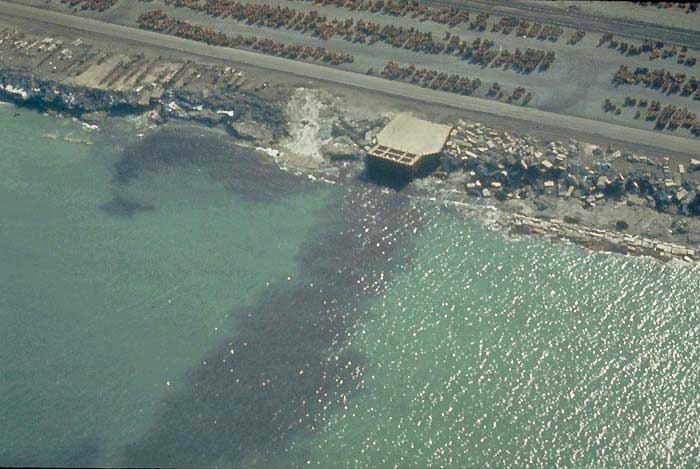
This image shows a point source of industrial pollution along the Calumet River

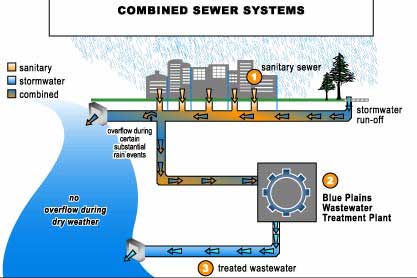
These images show the difference between a combined sewer overflow system found in many older cities, and a sewer system where sanitary and storm water are completely separated.
When it rains excessively, a combined sewer system may not be able handle the volume of water, and some of the combined runoff and raw sewage will overflow from the system, discharging directly into the nearest water body without being treated. This combined sewer overflow (CSO) is considered point source pollution, and can caused severe damage to human health and the environment.
Other sources of point source pollution are large farms that raise livestock, such as cows, pigs and chickens. These types of farms are known as concentrated animal feeding operations (CAFOs). If they do not treat their animal’s waste materials, these substances can then enter nearby water bodies as raw sewage, radically adding to the level and rate of pollution.
To control point source discharges, the Clean Water Act established the National Pollutant Discharge Elimination System (NPDES). Under the NPDES program, factories, sewage treatment plants, and other point sources must obtain a permit from the state and EPA before they can discharge their waste or effluents into any body of water. Prior to discharge, the point source must use the latest technologies available to treat its effluents and reduce the level of pollutants. If necessary, a second, more stringent set of controls can be placed on a point source to protect a specific water body.
